F4. Oral Session: Shaping Change Through Storytelling
F4.01 - Oral Session: Using Participant-generated Photography to Educate Home Visitors on Infant Mortality Inequities in New York City
Friday, April 24, 2026
8:15 AM - 8:45 AM PST
Location: Pavilion Ballroom East, Plaza Level
Area of Responsibility: Area VI: Communication Keywords: Cultural Competence@@@Health Communication@@@Maternal and Child Health, Subcompetencies: 3.2.5 Employ an appropriate variety of instructional methodologies. Employ an appropriate variety of instructional methodologies., 6.3.3 Tailor message(s) for the audience(s). Research or Practice: Practice
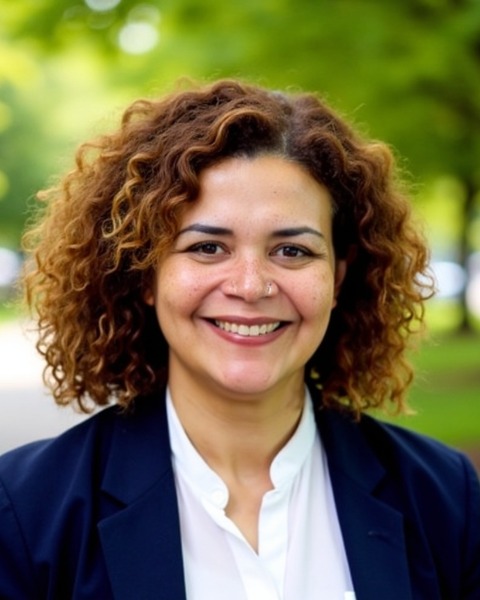
associate professor Hofstra University Uniondale, New York, United States
Learning Objectives:
At the end of this session, participants will be able to:
Apply at least two strategies for integrating participant-generated photography into health education training programs to increase cultural humility among healthcare staff working with marginalized communities.
Identify one method for incorporating authentic community voices and visual materials into public health training.
Brief Abstract Summary: Discover how participant-generated photography enhances home visitor training by centering Black maternal wisdom in the context of infant mortality prevention. Thirty Black mothers in New York City documented their infants' sleep environments, revealing decision-making shaped by structural constraints and survival strategies. Six photographs and maternal narratives were integrated into NYC Department of Health safe sleep training. Among 165 trainees, 90% reported that the community-generated images increased their cultural humility and ability to identify real-world risks. This method bridges clinical guidelines and lived realities, challenging deficit-based narratives. Learn strategies for incorporating community voices into health communication, demonstrating how visual storytelling promotes health equity by honoring the knowledge of marginalized communities while addressing systemic barriers.
Detailed abstract description: Gain practical strategies to transform your health communication by learning how authentic, community-generated visual materials bridge the gap between clinical recommendations and the lived realities of marginalized communities.
This presentation equips you with an equity-centered framework for addressing a persistent public health challenge: how to communicate effectively when traditional approaches fail to resonate with structurally marginalized populations. Discover how participant-generated photography can revolutionize professional training and community engagement, using infant mortality prevention as a compelling case study. Learn to center community wisdom in your practice. Sleep-related infant injury deaths disproportionately affect Black families in New York City, yet conventional safe sleep messaging often creates a disconnect. This presentation showcases how Black mothers became co-educators by documenting their infants' sleep environments, resulting in powerful images that reveal sophisticated decision-making processes.
Discover evidence-based outcomes. Six photographs and maternal narratives were integrated into NYC Department of Health safe sleep training, transforming how 165 home visitors and healthcare staff understand infant safety, with 90% reporting increased cultural humility and an improved ability to identify real-world risks.
Acquire actionable frameworks that are adaptable to your specific context. Learn concrete strategies for incorporating community voices into health communication, moving beyond deficit-based narratives that label practices as "non-compliance." Utilize visual storytelling to expose structural inequities that influence health behaviors and develop more effective, culturally responsive interventions.
Walk away with practical tools for immediate application, including guidance on photo-elicitation methods, integrating community materials into training, and facilitating role-playing scenarios honoring both clinical evidence and lived experience. Whether you work in maternal-child health or chronic disease prevention, gain insights to enhance your practice and advance health equity.