THURS-046 - Building Climate Justice Leaders: Using Project-based Learning to Strengthen Self-efficacy in Undergraduate Public Health Education
Thursday, April 23, 2026
11:45 AM - 12:45 PM PST
Location: Plaza Foyer
Area of Responsibility: Area VII: Leadership and Management Keywords: Career Development and Professional Preparation@@@Climate Change@@@Partnerships and Coalitions, Subcompetencies: 7.2 Prepare others to provide health education and promotion., 5.2 Engage coalitions and stakeholders in addressing the health issue and planning advocacy efforts. Research or Practice: Practice
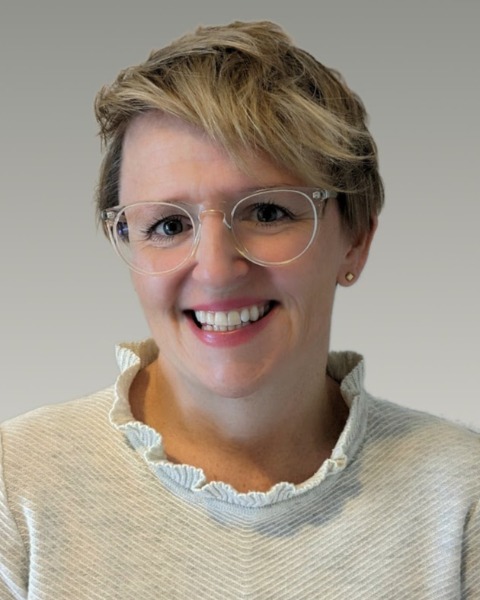
Assistant Professor of Public Health Eastern Connecticut State University W Simsbury, Connecticut, United States
Learning Objectives:
At the end of this session, participants will be able to:
Design an equity-centered, role-play project-based learning (PBL) assignment—with mentoring structures, facilitation routines, and rubrics—that you can integrate into your course to strengthen students’ self-efficacy, leadership, and advocacy skills.
Assess implementation challenges and describe evidence-informed strategies to enhance student efficacy and confidence with tackling wicked problems like health equity and climate change.
Brief Abstract Summary: Learn how an equity-focused, role-play project-based learning (PBL) assignment mimics a real-world multidisciplinary Climate Justice Coalition, thus building the next public health workforce by growing student self-efficacy, leadership, and advocacy skills. See how mentoring is embedded through faculty coaching during this scaffolded assignment. Discover the study’s SMART objectives and how results are analyzed. Recognize preliminary gains from the Fall 2025 pilot and what’s underway through Spring 2026. Leave with adaptable materials—assignment materials, prompts, and course design—and practical strategies to integrate climate justice PBL into your courses, strengthen recruitment and retention, and align with CEPH competencies while centering equity, application, community engagement and student well-being.
Detailed abstract description: Climate change is a wicked problem requiring interdisciplinary collaboration, systems-level thinking, and equity-centered solutions. To prepare the next workforce, this session demonstrates a pedagogy that cultivates leadership, mentoring, and well-being alongside technical skills. Grounded in Bandura’s self-efficacy theory, the design deliberately builds mastery experiences, models effective practice, and provides supportive feedback so students develop agency and confidence to act.
While self-efficacy strongly predicts student success, little research examines how PBL—especially with role-play—affects self-efficacy in undergraduate public health. This study uses a modified Student Assessment of Learning Gains (SALG) survey, administered post-project, to assess perceived gains in knowledge, confidence, and workforce readiness. Findings will illuminate how immersive, equity-focused PBL—combined with intentional mentoring and leadership cultivation—strengthens students’ belief in their ability to address public health and climate justice challenges, informing course design, recruitment, and retention strategies for the next generation of public health professionals.
To prepare undergraduates for complex public health work, we implement a multi-week project-based learning assignment—the Climate Change and Health Coalition—in PBH 330: Principles of Global Health. The assignment simulates real-world decision-making and engages students in role-play, collaboration, and problem-solving as they co-develop health-focused climate adaptation strategies for U.S. communities facing heat, flooding, or wildfire smoke. Each student assumes a stakeholder role (e.g., public health official, environmental justice advocate) and contributes to a coalition-driven plan. Teams practice autonomy, inclusive decision-making, and authentic problem-solving while centering equity, cultural context, and community partnership. Deliverables include a coalition strategy, a mock UN–style climate summit, a stakeholder brief for community use, and a reflective memo that surfaces leadership growth and self-care practices.
The project is underway across Fall 2025–Spring 2026. We will share preliminary pilot results that indicate upward trends in student self-efficacy, teamwork, and advocacy confidence, along with early examples of transferable skills students bring to internships and entry-level roles. We will also preview what to expect as the assignment scales in Spring 2026.
What attendees gain: a replicable, scaffolded PBL model ready to integrate into public health curricula; ready-to-use materials (assignment brief, role cards, facilitation tips, rubrics); practical strategies for mentoring structures and psychological safety; guidance on partnering with local organizations; and candid lessons on successes, challenges, and implementation pitfalls to avoid.