WED-045 - Post-resettlement Stressors and Social Support Among Democratic Republic of Congo Emerging Adult Refugees: Qualitative Study
Wednesday, April 22, 2026
12:30 PM - 1:30 PM PST
Location: Plaza Foyer, Plaza Level
Area of Responsibility: Area I: Assessment of Needs and Capacity Keywords: Qualitative Methods@@@Social Determinants of Health (SDOH)@@@Social Inequity, Subcompetencies: 1.3.3 Identify the social, cultural, economic, political, and environmental factors that impact the health and/or learning processes of the priority p, 1.3.5 Determine the capacity (available resources, policies, programs, practices, and interventions) to improve and/or maintain health. Research or Practice: Research
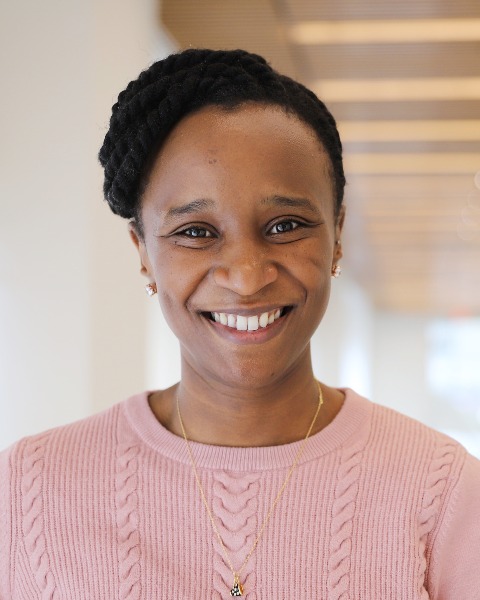
Student George Mason Univerity Baltimore, Maryland, United States
Learning Objectives:
At the end of this session, participants will be able to:
To identify the types of social support that Democratic Republic of Congo emerging adult refugees use to cope with post-resettlement stress in the United States.
To categorize the types of social support according to the levels of the Socio-Ecological Model
To examine how emotional, instrumental, and informational social support are used to address identified post-resettlement stressors.
Brief Abstract Summary: Learn about the nine post-resettlement stressors newly resettled Democratic Republic of Congo (DRC) emerging adult refugees face in the United States. Identify the types of social support they use to cope with post-resettlement stress. Discover how they use social support at the relationship, community, and societal levels to cope with post-resettlement stress.
Detailed abstract description:
Introduction: In 2024, 19.9% of the 100,034 refugees resettled in the United States (U.S.) were from the Democratic Republic of the Congo (DRC). Despite their growing presence, little is known about the post-resettlement stressors faced by emerging adult DRC refugees and how they use emotional, informational, and instrumental support to cope.
Purpose: The purpose of this study was to explore how DRC emerging adult refugees use emotional, informational, and instrumental support to cope with post-resettlement stress.
Methods: A convergent parallel mixed-methods design study was used. The theoretical frameworks for the study were the Socio-Ecological Model (SEM) and Social Support Theory. Participants were emerging adult refugees from the DRC, aged 18 to 29, who resettled in the U.S. between 2022 and 2023. Twenty participants completed a demographic questionnaire and participated in semi-structured interviews. The qualitative data was analyzed using deductive thematic analysis.
Results: Participants' mean age was 24.8 years. Nine main post-resettlement stressors were identified, such as food insecurity, lack of transportation, and language barriers. Instrumental support emerged as the most frequently used type of social support at the relationship, community, and societal levels.
Conclusion: Newly resettled DRC emerging adult refugees face multiple post-resettlement stressors and rely primarily on instrumental support to cope with these stressors.